Showing posts with label history lessons. Show all posts

March 1, 2012

History Lesson: Polariod

While I was in the Cities last, I picked up a photo annual of a snowboarding magazine and found a little article about the history of the Polaroid cameras. I thought it was interesting and wanted to share it. Somebody find me an old Polaroid...


In the 1900's, Henri Cartier-Bresson, a famous French photographer, coined the term "the decisive moment." Bresson, known for his candid photography, describes this as capturing a split second of a significant event on film. Thanks to inventor of instant film, Edwin Land, countless generations have been able to capture their own decisive moments and view them first hand.

In 1926, after completing his freshman year at Harvard, Land took time off to work on polarization research. He successfully created a prototype of a synthetic polarizer. Polarizing materials screen light waves by blocking out light waves that produce glare while allowing other light waves to pass through. In the 1930's, land and George Wheelwright III, a Harvard physics professor, went into business together. They crated various products from non-glare headlights to polarized sunglasses, and even polarized filters for Kodak. These filters, which were later called Polarioids, contained a pieces of polarizing material. They allowed images sot in bright conditions to have more contrast and less glare. Land's most notable accomplishment was crating instant film and the cameras that could produce them.


On December 25, 1943, Land was inspired by his daughter, Jennifer, to create instant film. On that Christmas Day, Jennifer asked her parents to see photographs they took that morning. Five years later, Polaroid's first camera, the Model 95, was released. It was named 95 because that was the original price tag. Polaroids became an instant success, selling out as soon as they hit store shelves.

Over the years, Polaroid has released several different camera models such as the Swinger, the SX-70, the Spectra and the Joycam. Various types of Polaroid film also exist: early renderings measured 4"x5", but the standard image size came to be 3"x4". Polaroids were unique in their square image format and white border.


A box of Polaroid film is approximately the same size as a box of crayons, each pack generally containing eight exposures. The sheets of film are loaded into the camera, and the chemicals used to produce the image are stored in the border of the film. As you take the photo, the film sheet moves through the camera and then ejects. Once the film is exposed to light, a chemical reaction occurs and the image is crated. In Polaroid's early days, only sepia film was available. At the time, a roll of film cost $1.75. It wasn't until the 1950's that black and white film because available, followed by color film in 1963.

In 1998, Polaroid stopped producing instant film. Fujifilm still makes their version of instant film, Instax. Things like Instagram are bringing back the Polaroid look in digital form.

Article written by Ilissa Maiatico in Snowboard Canada. Photos from Pinterest.


November 9, 2011

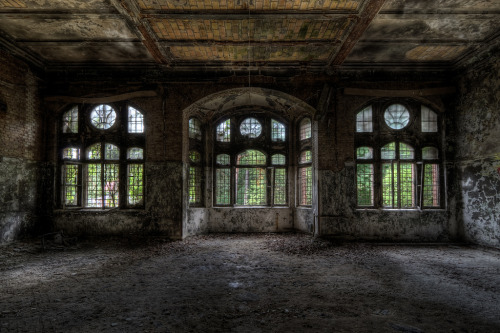
10 Abandoned Places


Stumbled across this video of 10 abandoned places on the Earth on Curbly. Way cool and the places look so eerie. I think this needs to be turned into a travel list.
Hashima Island, Japan
Abandoned since 1974

Centralia, PA, USA
Abandoned since 1984

Beelitz-Heilstatten, Germany
Abandoned since 2000

Oradour-Sur-Glane, France
Abandoned since 1944

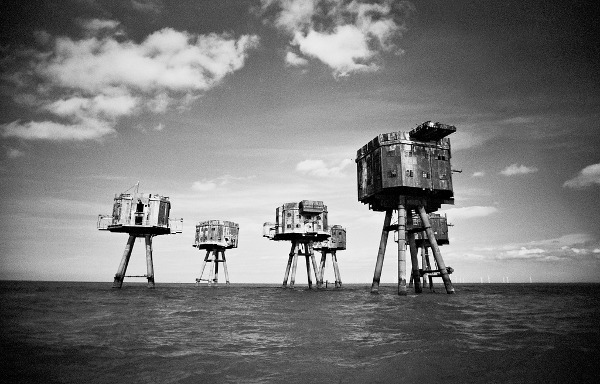
Maunsell Sea Forts, UK
Abandoned since 1964

Bodie, CA 
Abandoned since 1942

Humberstone, Chile
Abandoned since 1960

Kolmanskop, Namibia
Abandoned since 1954

Craco, Italy
Abandoned since 1963

Prypiat, Chernobyl, Ukraine
Abandoned since 1986

Don't the sea forts looks like something straight out of like Star Wars? Each place seems so photogenic with fascinating stories to tell.


November 8, 2011

Mondrian Inspired Art

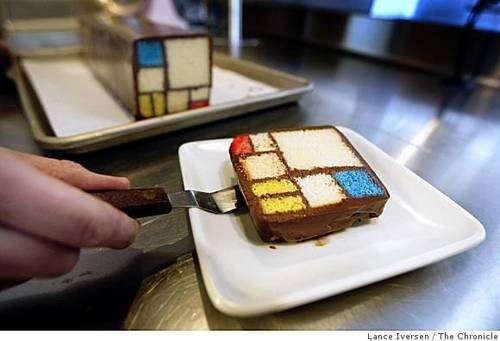
One by one I am making over the rooms in my apartment starting with my bedroom. It is getting the gray and yellow treatment. The walls were pretty blank so in trying to think of how to liven them up in a simple way. The Rooftop Coffee Bar in the San Francisco Museum of Modern Art that creates a cake inspired my Piet Mondrian's paintings.

How pretty right? I want to try my hand at making one. Anyways, it hit me that this was simple enough where I wouldn't have to deal with my lack of painting skills. So I made these:


My gray and yellow version of a Piet Mondrian piece of work. If you don't know who Mondrian is, he was a Dutch painter during the De Stijl art movement in the early to mid 1900's. De Stijl had a heavy focus on emphasis on abstraction and using just form and color.

My interior design tip: Pick up some canvas, paints, and a paintbrush. Then pull inspiration in from somewhere and get to work!

June 6, 2011

History Lessons: Crashed in the Jersey Woods

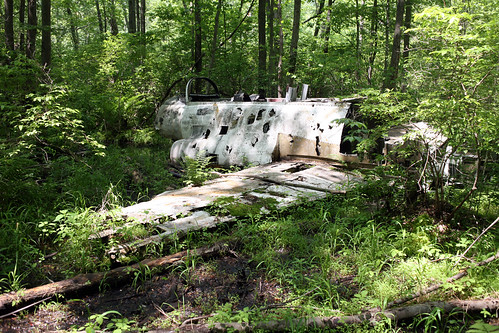
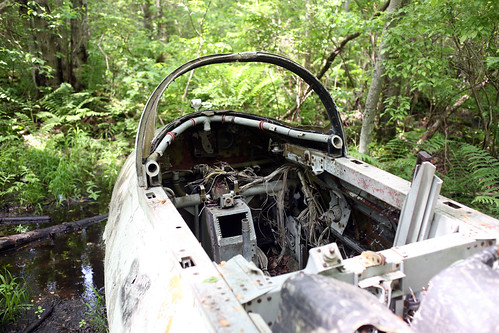
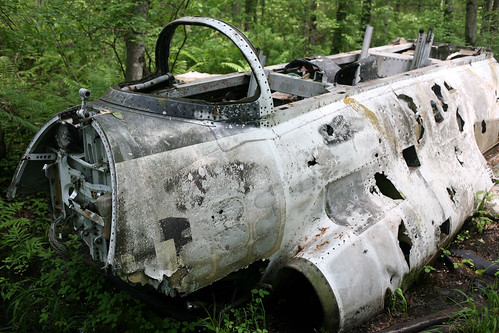
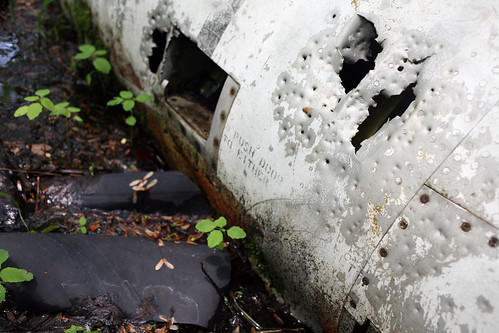
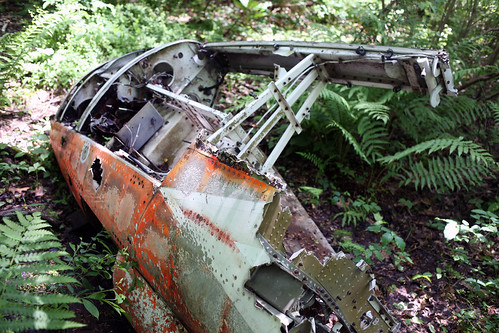
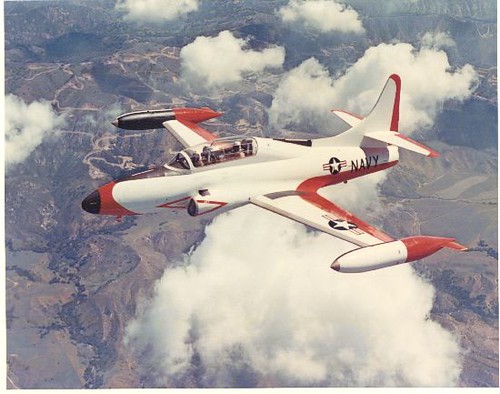
This morning I came across some incredibly awesome photos. I thought it would make for a nice short history lesson. Out in the woods of New Jersey there is an old crashed airplane. 

The plane went down in 1962 while on a training exercise. Even with the ejection system failing, the two pilots flying the aircraft survived. 


After the crash the military retrieved the engine of the plane for salvage. They painted it orange to indicate that the wreckage had already been found and recorded. 


Apparently this crash happened only 300 yards from a residential area. Talk about a close call.


This is what the plane looked like in action.

All images and information via Scouting New York. This makes me want to do some urban exploring. 

Today I'm rocking some pretty awesome tan lines from watching baseball yesterday. Now I have to figure out how to even everything out with a wedding coming up fast in July...And at the end of this summer I want to be able to run a 5K. I know, it's only 3 miles or so but hey, I'm not a great runner. So I think now is the time to become one. 


May 16, 2011

History Lessons: April Greiman


This is more like a 2 sentence history lesson...

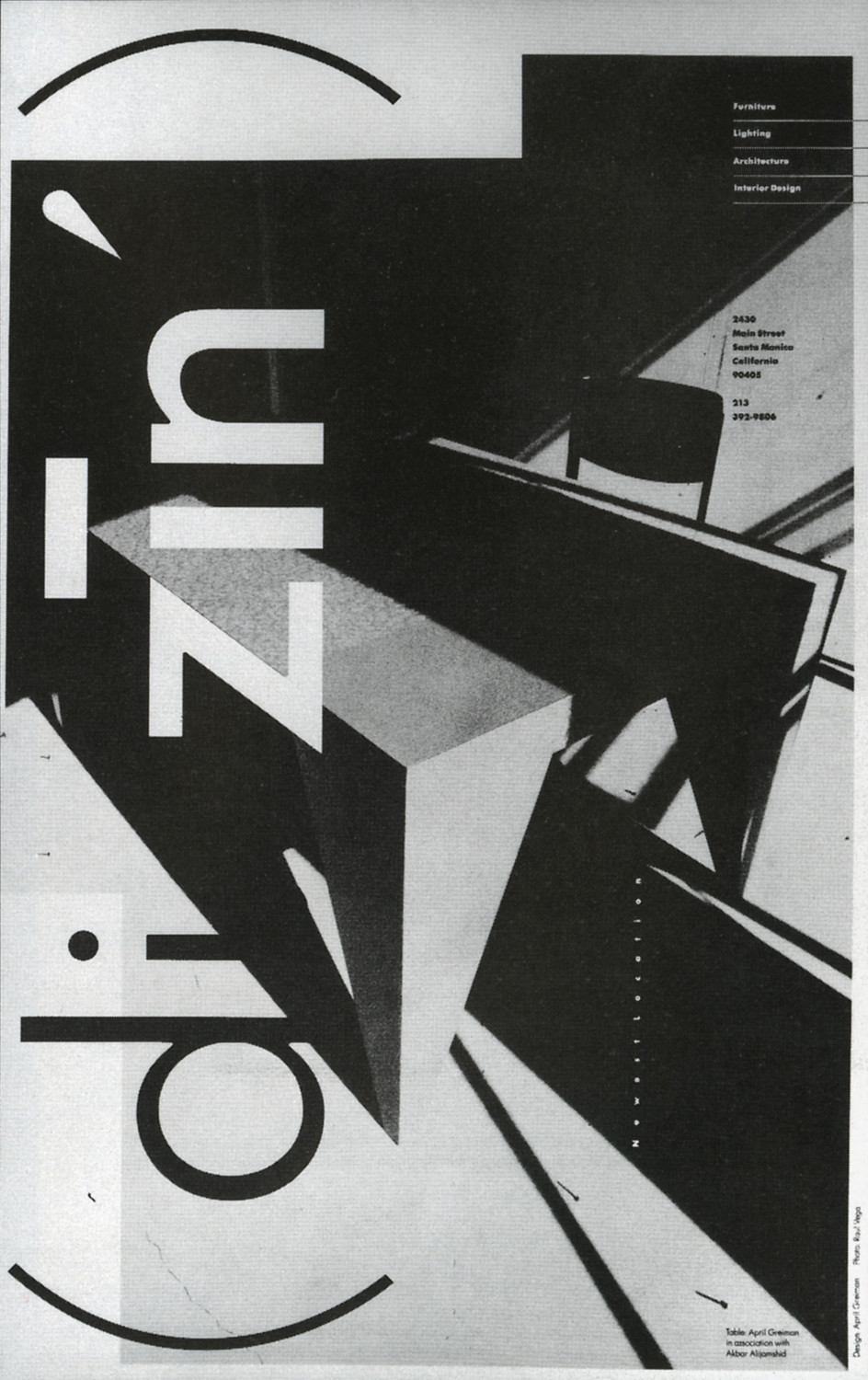
In my spirit of old school advertising, I thought about a graphic designer that stuck out to me when I took my History of Modern Design class a couple years ago. Her name is April Greiman. She was one of the first designers to embrace the computer as a medium for graphic design during the 80's.


The source for all the images found here. For more on April Greiman visit her website and her design consulting company Made in Space.

I think it's interesting to think about how much design has evolved, especially the process. I wonder how the process would be now if the community hadn't taken to computers when they did. It would be fun to do some designing the "old fashioned" way. 

Now I may have to start a mini series or something of 70's and 80's graphic designers...


Note 1: Since this is the time of year when the weather is FANTASTIC I may no be posting as often as I did during the winter. As much as I love researching and blogging, I just can't always justify sitting on my computer when it's sunny and perfect outside. My apologizes. 

Note 2: The season finale of Chuck was on tonight. I recommend, obviously, checking out the show. I'm quite sad that in the fall S5 will be its last, especially with the cliffhanger tonight. There are so many stories that can be told now! And for those that don't like the ending, think about it, the concept completely works for who the character is. (I can't say too much, I know there's a couple of friends out there that would be disappointed if I spilled the beans since they probably haven't watched it yet...)


April 7, 2011

History Lessons: Rosie the Riveter

Today I was listening to one of my favorite podcasts, Stuff You Missed in History Class and came across one about Rosie the Riveter. The most famous Rosie now days is the "We Can Do It" piece. However, there was another version made before that one.

The original depiction of Rosie the Riveter was done by the famous Norman Rockwell. It was the original propaganda used in WWII in 1943. It was done for the cover of the The Saturday Evening Post.


But I'm sure that this is the one you are used to seeing, the very feminine version of Rosie. 


This is the version by Jay Howard Miller. Contrary to belief this was not drawn to inspire women to join the workforce to help with the war efforts. Miller was contracted by an ad agency to do this for Westinghouse Electric. It was only supposed to be displayed for a short period of time and only in-house. But it has definitely stood the test of time. And it wasn't just targeted towards women but men also. Pieces of propaganda like this were to 1) increase production, 2) decrease absenteeism, and 3) discourage labor movements inside the company. The upper thrust of her arm was a common motion done at the company (by both men and women) during the time and characteristic of the company at the time.

I think it's a common conception that it was all women during the time of WWII were rushing to the factories to take the place of their husbands, sons, fathers, etc. But the females that were going to take those places weren't necessarily the housewives with families to take care of. It was actually many single women trying to make money to support themselves. And I find it a bit ironic that as Candace and Jane put it in the podcast, that this image can be seen on everything, even household things that housewives at the time would use.

The biggest reason why Norman Rockwell's version of Rosie the Riveter didn't end up being the popular version is because of the copyright that is placed on it. Miller's Rosie didn't have any copyright protection and was taken up by feminist movements in the 1980's. Modern views of Rosie is that she is a symbol of female power and that women can do anything men can do.


March 3, 2011

History Lessons: The Story of Bonnie and Clyde

This past Monday's episode of Chuck was a semi Bonnie and Clyde spin-off. It was epic. When I was deciding which podcasts to download for the week, I noticed a Stuff You Missed in History Class podcast on Bonnie and Clyde. It was perfect! Plus, the story is really interesting.

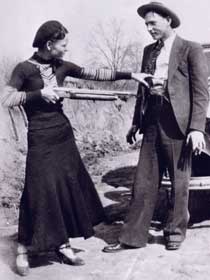
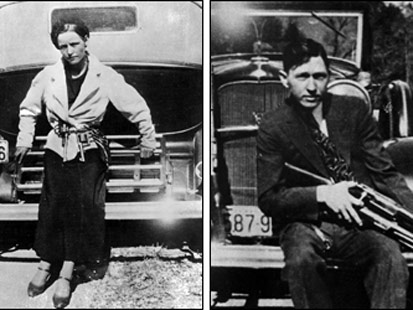
Bonnie Parker was born on October 1, 1910 in Texas. Bonnie was a straight A student in school and on the honor roll. When she was only sixteen she married her childhood sweetheart Roy Thorton. Even after he was sentenced time in prison, they never got divorced. Clyde Barrow was born March 24, 1909 in Texas. He, on the other hand, was never interested in the world of academia. Clyde was arrested for the first time in 1922 for auto theft and continued to commit robberies for the next four years.


Bonnie and Clyde met for the first time when Bonnie was staying with a friend in Dallas. Her friend had broken her arm and Bonnie was there to assist her while she was out on work. Clyde was a mutual friend of Bonnie's friend. According to most historians the rest was history. Bonnie feel in love with Clyde and joined him in his lifestyle of crime.


Not long after they met, Clyde was sent to prison. They wrote back and forth and Clyde convinced Bonnie to help him break out. After his escape he continued his life of crime and was sent back to prison once again. This time he was sent to the Eastham Prison in Texas. In 1932 he gets pardoned. This is when the Barrow Gang was formed.

Their life was full of robberies, stealing cars, and murders. The robberies weren't ever the best, they barely made $1,500 in a heist. The first murder committed was a police officer outside a dance on August 5, 1932. One of their trademark moves was the kidnap police officers who pulled them over and drive around with them for awhile and release them.


Bonnie was an avid photographer. This helped make them the duo they are own as. She documented their journey and life throughout the years. The rolls of film usually got left behind and hugely aided the media's fascination with them. Clyde's favorite car was the Ford V-8 and was the car they stole the most often. This kind of gives the police a bit of a roadmap to follow Bonnie and Clyde all over the country.

There was a car reck in 1933 that severely injured Bonnie. She got pinned under a car and her leg was burned. This is when things started to fall apart for the Gang. Clyde's brother, who had joined the gang awhile back, and his wife, were severely injured during a gun fight and escape when a police officer figured out where they were staying at in July 1933. Bonnie and Clyde left them and Clyde starts a plan to bust out prisoners from the Eastham prison. During this break-out several security guards are killed by the Gang. After this, there is a crack down on the Bonnie and Clyde hunt. The FBI sets a bounty hunter in search of them. During this time several more police officers were murdered, more cars were stolen, and places were robbed.

Eventually they are betrayed by Henry Methvin, who was part of the Eastham break out that Bonnie and Clyde set up. On May 3, 1934, Bonnie and Clyde are ambushed by a hail of gunfire in Louisiana. Henry tells the Duo that they were going to meet up at his parents house and he would rejoin their gang. Once the police get an official ID on the couple as they drove up the road to Henry's parent's house, they open fire. About 168 bullet holes were found on the car and over 50 were found in bodies. Clyde was the first to die. He was shot in the head with one of the first shots fired. Accounts say that the polices officers were haunted afterwards by Bonnie's screams before she died.


After the murders people were all over the scene trying to get a piece of Bonnie and Clyde, parts of the car, pieces of hair and clothes. The car was towed into town afterwards and shown to school kids. Over a dozen guns, 1000's of rounds of ammo, and several license plates were found in the trunk of the car, along with a saxophone that Clyde would play. 

There is so much more to the story of Bonnie and Clyde. This was kind of just a quick rundown. If you like history and the 1920/1930's you should definitely read up on this Duo. It's kind of amazing how much they got away with before they were finally caught. 

:)

*All of the images are from a Google search. I forgot to source them as I went a long. Oops.  

February 24, 2011

History Lessons: The Winchester Mystery House

My history lesson today  is courtesy of the Stuff You Missed in History Class podcast from How Stuff Works. I thought it was super interesting and wanted to share it with you. 

It is about the Winchester Mystery House in San Jose, CA. The House was built over 38 years by Sarah Winchester. It is said that the House is one of the most haunted places in California and the U.S. Sarah Winchester was the wife of William Winchester, the heir to the Winchester Repeating Arms Company. The company developed the "gun that won the west" and helped the North win in the Civil War. 


Sarah and William had a daughter who passed away soon after birth. William passed away afterwards and Sarah never recovered from the deaths. She was told by a medium that there were spirits haunting the Winchester family who were killed by the Winchester rifles. She told Sarah that she was to move out west from the east coast. She was to build a grand house for the spirits to reside. She left and found a place in the Santa Clara Valley where she began construction on the house.


The original house was 6 room farmhouse that sat on 162 acres of land. Sarah turned this house into a 7 story mansion. Construction went on for 38 years, 24 hours a day. She thought that if she stopped building on the house she would die, which is why construction on the house was continuous. Legend has that the construction and planning of the house was to thwart off the evil spirits and confuse them but provide the good spirits with a home. It is said that the house was supposed to have over 500 rooms but only 160 were finished.


What makes this house strange and a mystery is there are hallways that lead to nowhere, doors that open to drop-offs, extremely narrow stairs that lead to ceilings and walls. There is a staircase in the house that is seven flights, contains 44 stairs, but is only 9 feet tall. Each step is only 2 inches high. It is thought that this staircase was built to accommodate Sarah's arthritis. One of the rooms contains four fireplaces and a drop-off leads to a sink several floors below.


Now I'm sure you're wondering where in the heck she got all of this money to build the house. She had inherited $20,000,000 after her husband passed away and half the stock from the Winchester Repeating Arms Company. That have her $1,000 to live off of per day!

This place is definitely on my list of places to go. Visit www.winchestermysteryhouse.com for more about Sarah Winchester, the Mystery House, and the legends.

:)

Related Posts Plugin for WordPress, Blogger...